Keynote Speakers

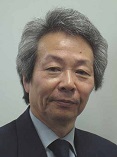
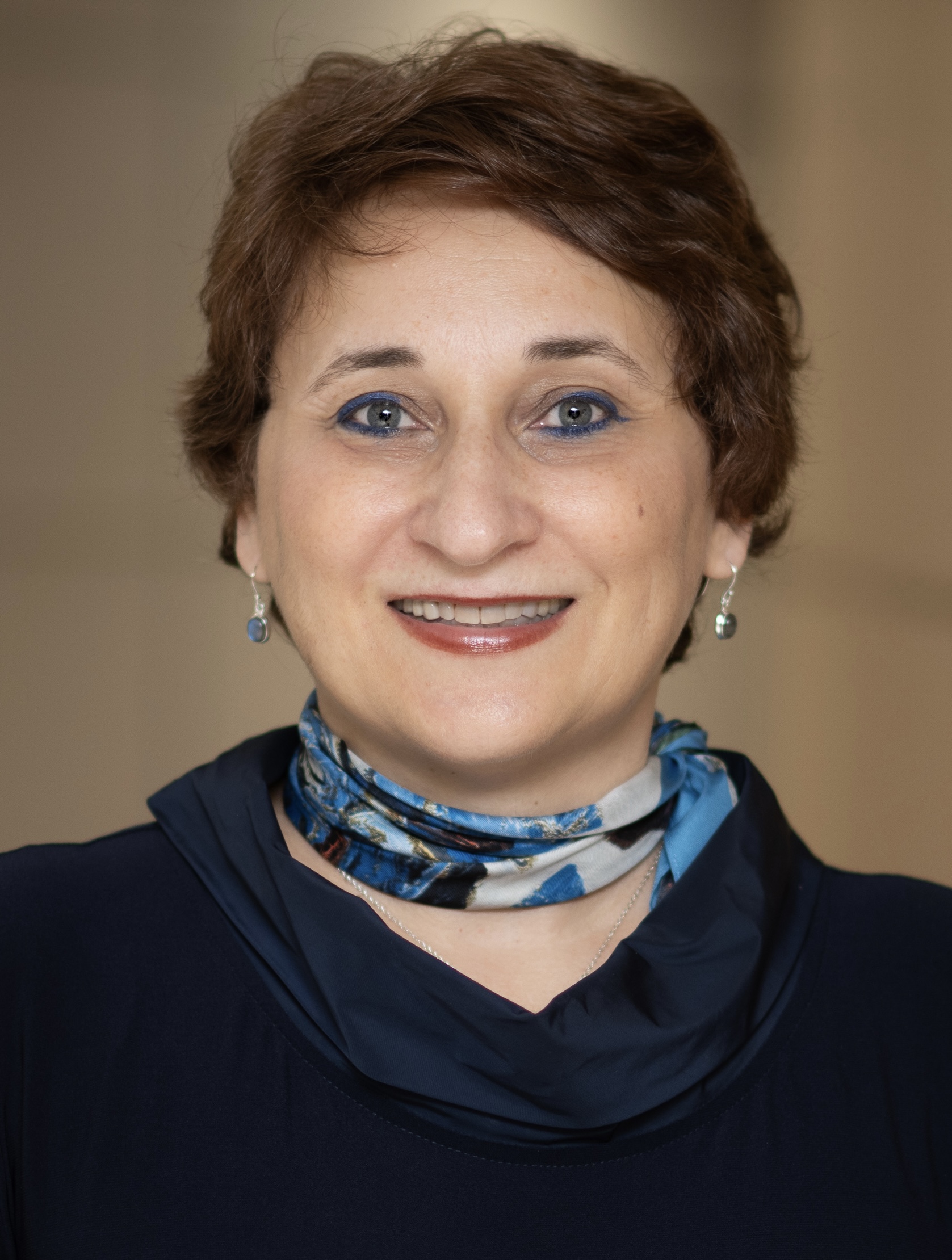
Prof.
Octavia A. Dobre
Fellow of the
IEEE, Member of Academia Europaea
Memorial University, Canada
Speech Title:
Bridging Wireless Communications and Quantum
Computing
Abstract: With 5G-Advanced
established in 3GPP Release 18 and extended
in Release 19, as the field moves toward 6G,
the wireless landscape is undergoing
transformative shifts. These include the
seamless integration of people, machines,
and environments through embedded
intelligence; the convergence of
space-air-ground networks; the unification
of diverse frequency bands with distinct
propagation behaviors; and the fusion of
communication, computing, sensing,
positioning, and intelligence. Although
further progress is required on the road to
6G, researchers worldwide are already
exploring groundbreaking technologies and
emerging services extending beyond it.
This talk will provide an overview of
advances toward next-generation wireless
networks and highlight their connections to
quantum computing. It will also introduce
key concepts in quantum computing and
illustrate their potential through an
example application within this rapidly
evolving ecosystem.
Biography:
Octavia A. Dobre is a Professor and Tier-1
Canada Research Chair at Memorial
University, Canada. Her research focuses on
next-generation wireless networks, as well
as optical and underwater communications.
She has authored more than 600 publications
in these areas and has received numerous
Best Paper Awards, including the prestigious
IEEE ComSoc Heinrich Hertz Award.
Dr.
Dobre served as Vice President of
Publications for IEEE ComSoc. She was the
Founding Editor-in-Chief of the IEEE Open
Journal of the Communications Society and
previously served as Editor-in-Chief of IEEE
Communications Letters.
She is a
Clarivate Highly Cited Researcher and a
Fellow of the IEEE, the Engineering
Institute of Canada, the Canadian Academy of
Engineering, and the Royal Society of
Canada. She is also an elected member of
Academia Europaea and the European Academy
of Sciences and Arts.

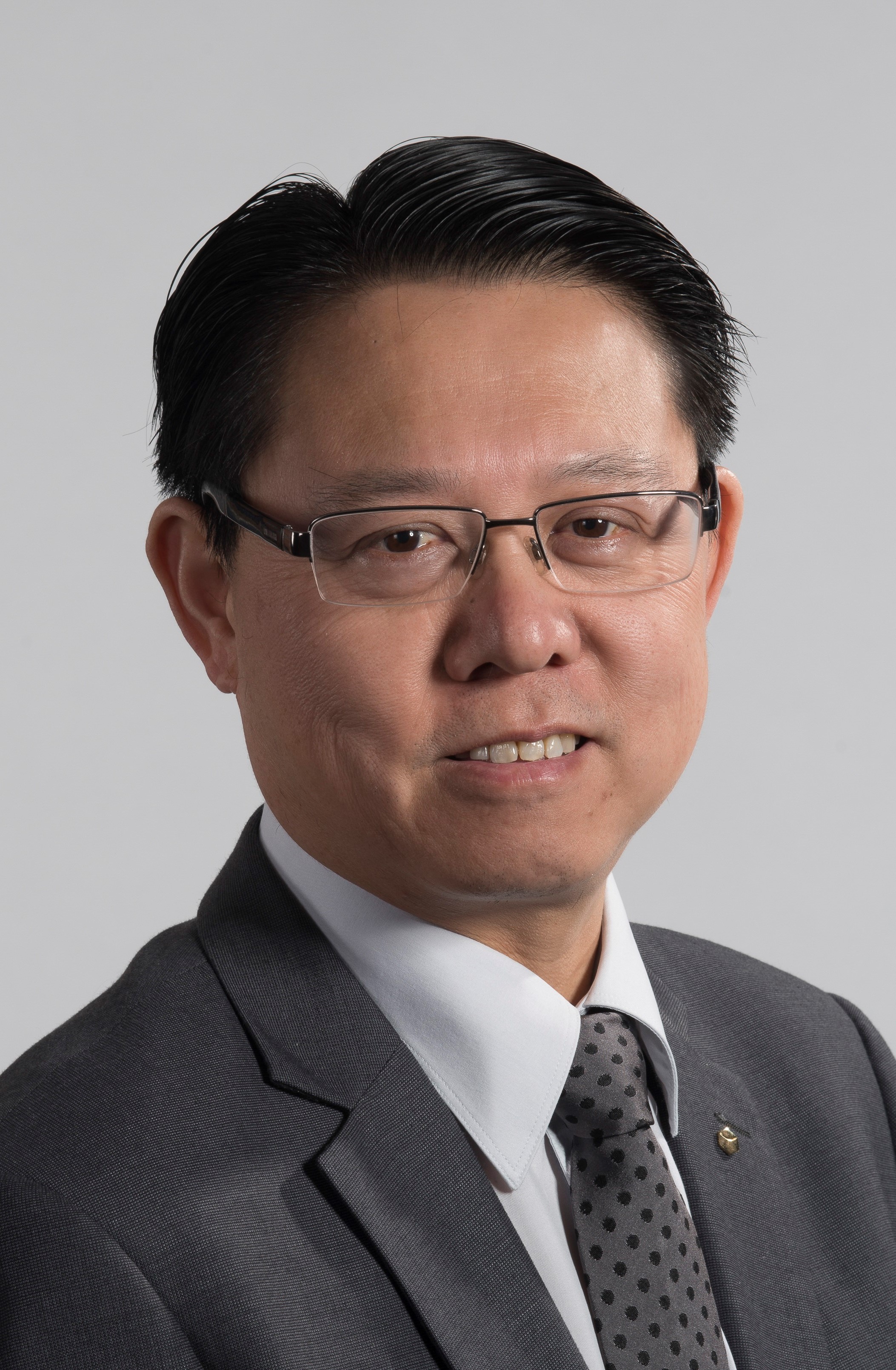
Prof.
Xinghuo Yu
Fellow of the Australian
Academy of Science, Honorary Fellow of
Engineers Australia, Fellow of the IEEE
RMIT University,
Australia
Speech Title:
Synergetic Interplay between Artificial
Intelligence and Complex Networks
Abstract: Artificial Intelligence (AI), as a
foundational technology for intelligent
systems, is playing an increasingly pivotal
role in modern industry and society. In
parallel, Complex Networks (CN) provide
powerful representations of the structural
and dynamical characteristics of large-scale
real-world systems. Recent advances in AI
have established it as a transformative
platform for solving highly complex
problems, while CN offers complementary
perspectives that can simplify analysis and
enhance computational efficiency.
This
talk will first review recent developments
in both AI and CN, and then explore emerging
challenges and opportunities arising from
their synergetic interplay, with the aim of
harnessing the strengths of both fields. We
will further discuss prospective paradigms
that may extend beyond conventional AI
frameworks to address the growing complexity
of interconnected systems, including
innovative methodologies inspired by nature.
Particular attention will be devoted to
modelling, control, and optimisation issues
in large-scale industrial cyber-physical
systems, such as smart grids. Several
real-world industrial problems, including
selected case studies from our own research,
will be presented to illustrate practical
implications and future directions.
Biography: Professor Xinghuo Yu is a
Distinguished Professor and Associate Deputy
Vice-Chancellor at RMIT University (Royal
Melbourne Institute of Technology),
Melbourne, Australia. He is a Fellow of the
Australian Academy of Science and an
Honorary Fellow of Engineers Australia. He
is also a Fellow of the IEEE, the
International Federation of Automatic
Control, the Australian Computer Society,
and the Australian Institute of Company
Directors. He served as President of the
IEEE Industrial Electronics Society from
2018 to 2019.
Professor Yu’ research
spans control systems, intelligent and
complex systems, artificial intelligence and
machine learning, and power and energy
systems. His scholarly work has attracted
over 63,000 citations on Google Scholar,
with an H-index of 118. He has been
recognised as a Clarivate Highly Cited
Researcher in Engineering every year since
2015. His honours include the 2018 M A
Sargent Medal from Engineers Australia, the
2018 Australasian AI Distinguished Research
Contribution Award from the Australian
Computer Society, and the 2013 Dr.-Ing.
Eugene Mittelmann Achievement Award from the
IEEE Industrial Electronics Society.

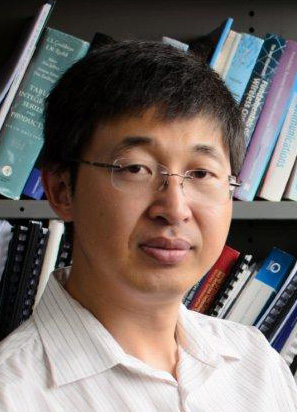
Prof.
Yonghui
Li
Fellow of the IEEE
University of Sydney,
Australia
Speech Title: Beyond
5G towards a Super-connected World
Abstract: Connected smart objects, platforms
and environments have been identified as the
next big technology development, enabling
significant society changes and economic
growth. The entire physical world will be
connected to the Internet, referred to as
Internet of Things (IoT). The intelligent
IoT network for automatic interaction and
processing between objects and environments
will become an inherent part of areas such
as electricity, transportation, industrial
control, utilities management, healthcare,
water resources management and mining.
Wireless networks are one of the key
enabling technologies of the IoT. They are
likely to be universally used for last mile
connectivity due to their flexibility,
scalability and cost effectiveness. The
attributes and traffic models of IoT
networks are essentially different from
those of conventional communication systems,
which are designed to transmit voice, data
and multimedia. IoT access networks face
many unique challenges that cannot be
addressed by existing network protocols;
these include support for a truly massive
number of devices, the transmission of huge
volumes of data burst in large-scale
networks over limited bandwidth, and the
ability to accommodate diverse traffic
patterns and quality of service (QoS)
requirements. Some IoT applications have
much stringent latency and reliability
requirements which cannot be accommodated by
existing wireless networks. Addressing these
challenges requires the development of new
wireless access technologies, underlying
network protocols, signal processing
techniques and security protocols. In this
talk, I will present the IoT network
development, architecture, key challenges,
requirements, potential solutions and recent
research progress in this area, particularly
in 5G and beyond 5G.
Biography:
Yonghui Li is now a Professor and Director
of Wireless Engineering Laboratory in School
of Electrical and Information Engineering,
University of Sydney. He is the recipient of
the Australian Research Council (ARC)
Industry Laureate Fellow in 2025, ARC Queen
Elizabeth II Fellowship in 2008 and ARC
Future Fellowship in 2012. He is an IEEE
Fellow and Clarivate highly cited
researcher. His current research interests
are in the area of wireless communications.
Professor Li was an editor for IEEE
transactions on communications, IEEE
transactions on vehicular technology and
guest editors for several special issues of
IEEE journals, such as IEEE JSAC, IEEE IoT
Journals, IEEE Communications Magazine. He
received the best paper awards from several
conferences. He has published one book, more
than 300 papers in premier IEEE journals and
more than 200 papers in premier IEEE
conferences. His publications have been
cited more than 30000 times.
Keynote Speaker Gallery of past ICINTs
|
|
|
Prof. Rajkumar Buyya |
Prof. Jiankun Hu
|
Prof. Jiong Jin World Top 2% Scientists for Citation Impact since 2019 of Stanford University’s List |
|
|
|
Prof. Koichi Asatani |
Prof. Wei Xiang |
Prof. Kanta Matsuura |